THE MISSING INFRASTRUCTURE
Every major freight system knows something important. None creates the facility ground truth.
These systems do important work. Each knows part of the operation. None creates one facility-authoritative, structured, geospatial record of how the destination actually works.
TMS — knows the load.
ELD — knows the truck.
WMS — knows the inventory.
Dock scheduling — knows the appointment.
YMS — knows what is in the yard.
GPS — knows where the truck is.
DeliveryInstructions.ai creates the facility ground truth those systems can use.
Shared facility profiles work today without an integration. ELD integrations are in development so carriers can place facility-authored information in the driver's normal workflow. They are not available yet.
See a Working ExampleHere is the one AI is waiting for.
The industry standardized everything except the data.
The container standardized the box. The pallet standardized handling. The barcode standardized the product number. EDI standardized the paperwork. GPS standardized tracking, where the truck is. Every time freight standardized something, cost fell out of the system.
Nobody standardized the information about the location. Which gate, which door, what paperwork, how check-in works. It exists at every facility. It lives in people's heads, on sticky notes, and in phone calls. The regulars know it. Everybody else guesses.
Every facility is different. That is the point. We standardize the questions, not your facility. Your answers are yours because you are the one who knows how your building runs.
The industry needs a data standard. We started with delivery instructions.
This is what standardized looks like.
Two working examples using demonstration data. Click either one. No form, no login.
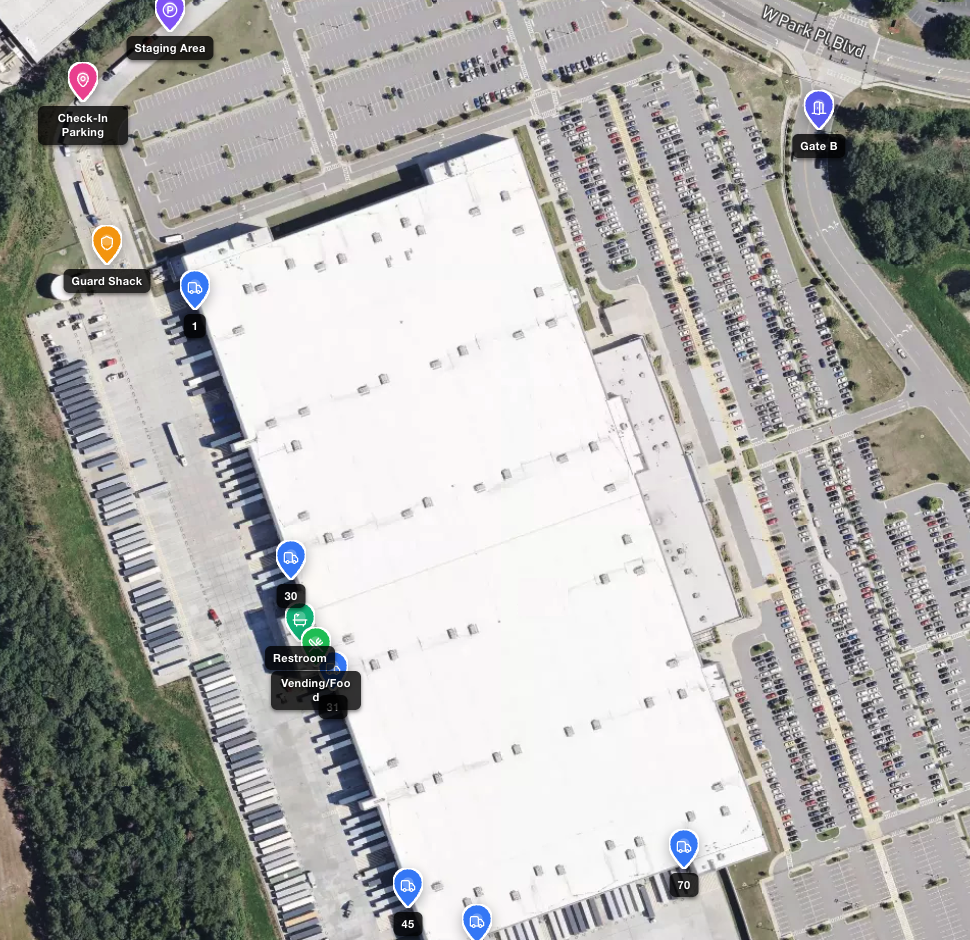
- Inbound enters at Gate 3, not the main entrance.
- Reefer unloads at doors 40 through 60.
- Two hard copies of the BOL.
- Driver stays in the cab during unload.
- Receiving 6am to 2pm.
A driver can read it on a phone before the truck gets there. A system can read it the same way. That second part is the difference between instructions and a note in a text box.
Fill it out once. Drivers see what they need.
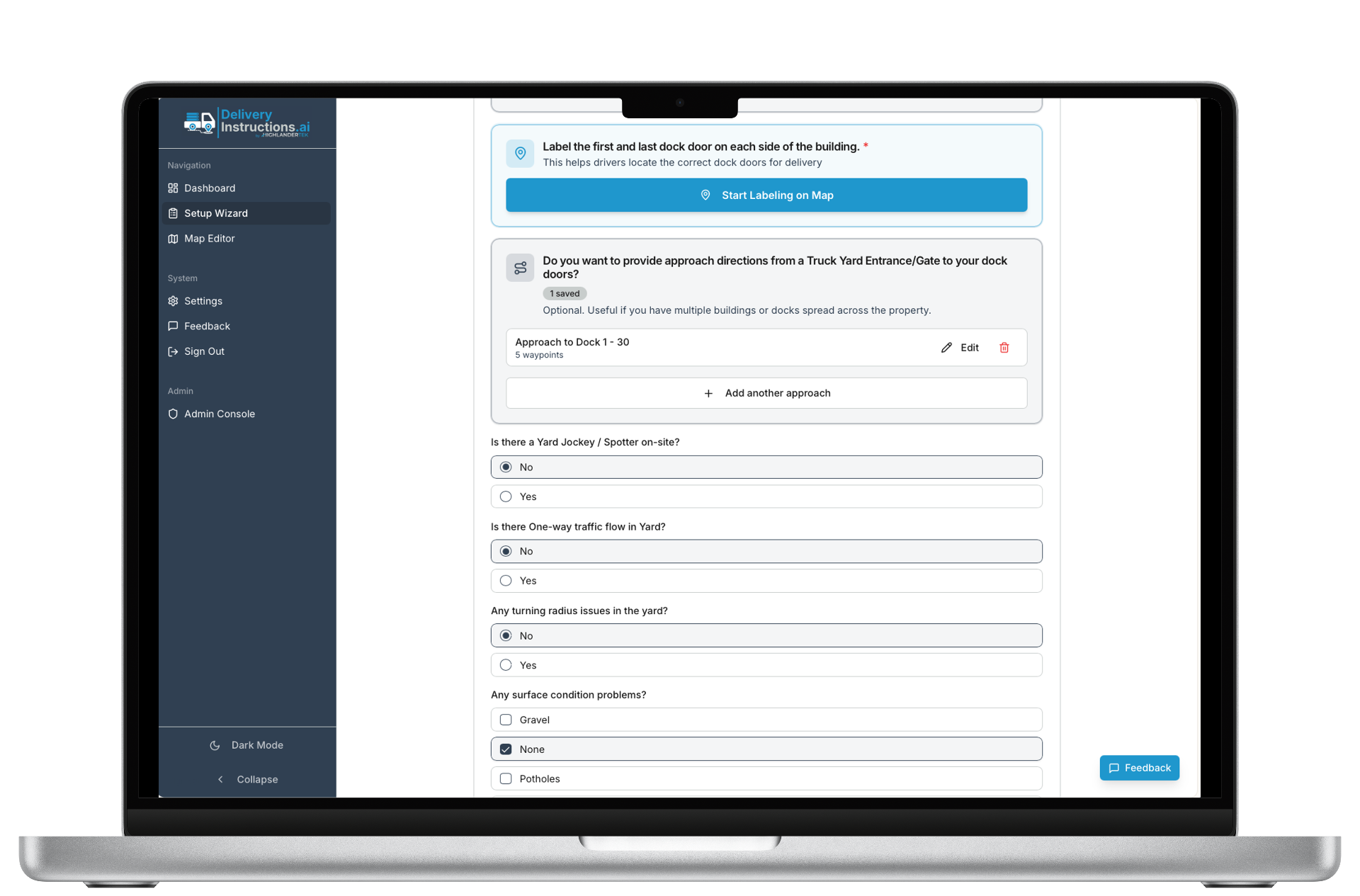
What your team fills out
Structured questions about your facility. Gates, docks, paperwork, hours, contacts. Drop pins on a satellite map to mark every location. About 20 minutes, once.
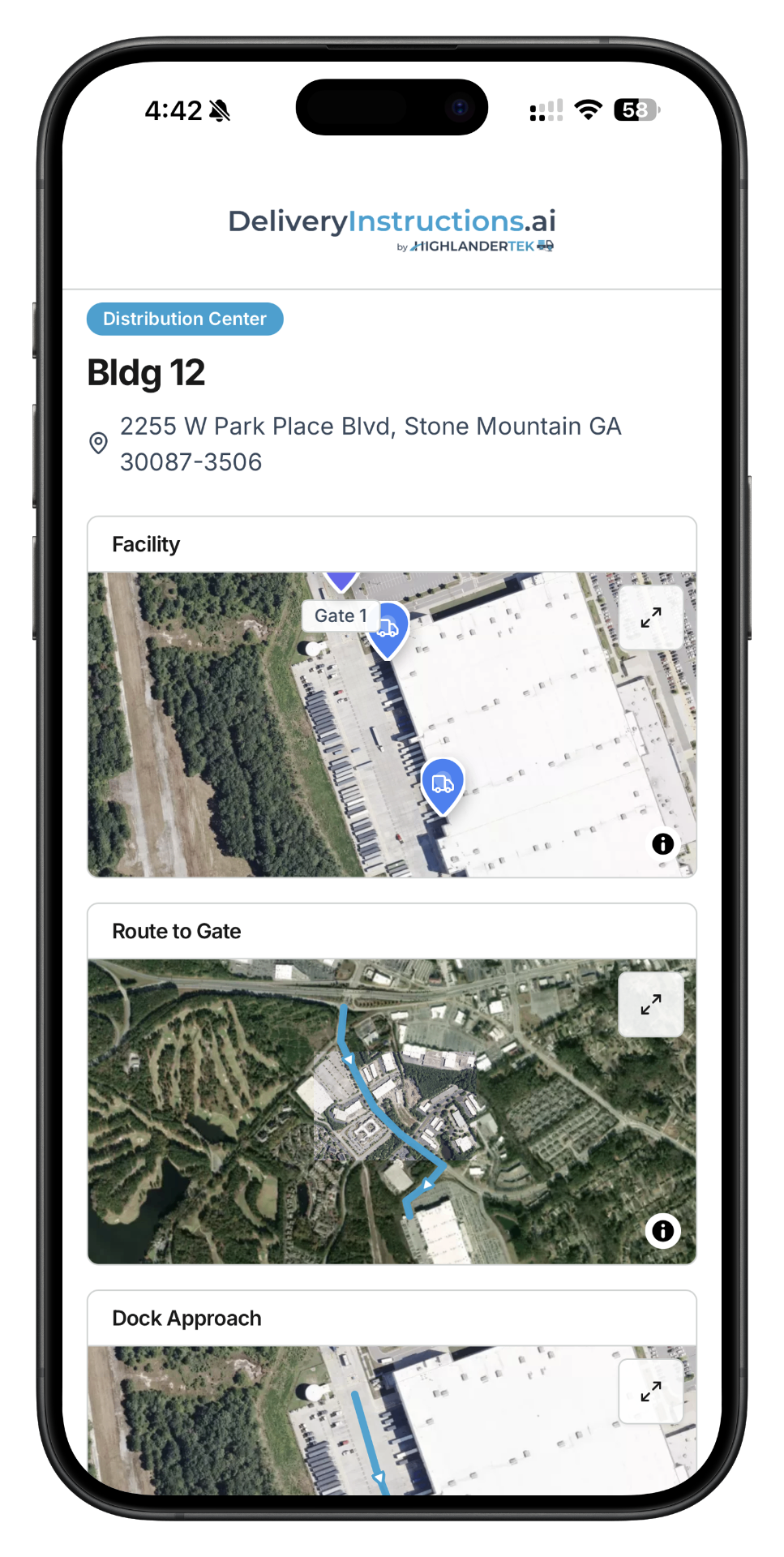
What the driver sees
Everything they need before they arrive. A map of your facility, the route to the right gate, and the approach to the dock. No calls, no guessing.
The questions stop.
Your staff answers the same questions all day from drivers, dispatchers, and brokers. Where is the entrance, where do I park, who do I check in with, what paperwork, can I come early. Every one of those answers becomes a field on your page. Fill it out once, put the link in the ratecon, and it travels with every load.
No blank page. Just questions about your facility, and a link when you are done.
The honest part. It costs you about 20 minutes per building. In return you get one link to hand every carrier and broker you work with, and it stays current when anything changes. Not an IT project, nothing for your team to learn, and nothing to buy.
Ask any AI vendor one question.
What data does it run on? It's a fair question, and the answer explains the whole state of AI in freight.
AI changed coding, law, and medicine because those industries standardized their data long before AI arrived. A for loop is a for loop everywhere. Every legal case cites the same way. Every medical image on earth is stored in one format. Decades of standards made those industries readable, and AI showed up and read them.
Freight is following the same path, and the first step is already working. The AI here today runs on the data freight already has. It reads the documents, quotes the loads, makes the check calls, answers the carrier calls, audits the invoices. Real work, real savings.
But the data that would transform how the industry operates is different. It sits in thousands of systems that each store it their own way, and one piece was never collected at all. The information about the location. Which gate, which door, what paperwork, how check-in works. No model can read what was never written down.
What's here is good. What transforms the industry isn't here yet, because the data it needs isn't either.
Why this exists.

12 years running operations across 9 distribution centers. A prior startup solving location problems for LTL carriers. Now solving location problems for truckload.
We started HighlanderTek to help carriers cut dwell and detention. We tried putting AI on the instructions that already exist. It couldn't fix them. The data has to be created in a standard format from the start, by the facility, because the facility is the only one that knows how it runs.
I spent 12 years running operations for a large distributor. Honestly, we did nothing to make the drivers' job easier. We just expected them to show up on time and be ready to be unloaded. The last 10 years I've spent building for the driver, and they want the same thing we wanted. The fix starts with real structured delivery instructions.
Some will ask how somebody who never ran a carrier or a brokerage fixes a freight problem. But this problem doesn't live on the truck. The information a driver needs belongs to the facility, and the facility is the only one that has it. Carriers and brokers can't publish data they were never given. Getting it out of the building is a facility job. That's the side I come from.
Dyrc McLeod, Founder
Carriers.
Your drivers lose the most time at facilities you don't control. When a facility has its delivery instructions filled out, your driver knows the gate, the check-in, the dock, and the paperwork before pulling in. The driver has the facility's own instructions before he arrives.
You can get the facilities you serve set up. It's free for them and takes about 20 minutes, and every one that fills it out is a facility your drivers get in and out of faster.
Brokers.
You spend all day answering the same questions about facilities the driver has never seen. The instructions were never written down anywhere the driver could reach them. When the facility fills them out, one link on the rate con travels with the load to every carrier and driver who covers it.
You can get the facilities you serve set up. Loads with complete instructions cover faster, disputes finally have a record of what the driver was told, and the broker who's easy to haul for gets first call on capacity.
FAQ
Efficiency starts with instructions.
Free. About 20 minutes. Every carrier and driver gets the same answers.